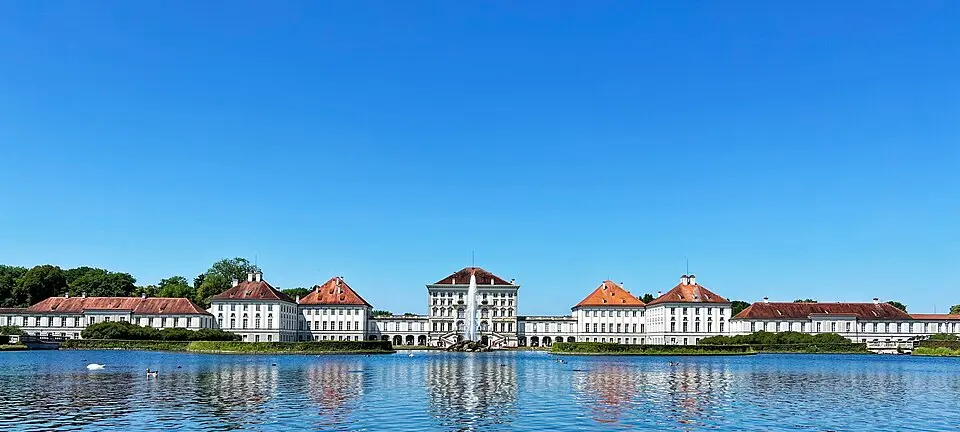
Munich lies in the Alpine foothills on a high plain through which the Isar flows from southwest to northeast. The city is surrounded by neighbouring municipalities such as Oberschleißheim and Garching to the north, Germering and Gröbenzell to the west, and Karlsfeld to the northwest. With an average elevation of 519 metres above sea level, it is one of Germany’s higher-lying major cities. The landscape is shaped by gravel plains, moors in the north and forests in the south, including the Perlach Forest and the Forstenried Park.
The name Munich is interpreted as “near the monks” and appears for the first time in 1158 in a document issued by Emperor Frederick I. Whether there was already a monastic settlement at the time is uncertain; the name may also refer to an older, no longer existing settlement. The city grew from a small settlement into an important centre that today houses state and federal authorities. Economically and culturally, Munich is an important location for corporations, universities and international events.
Munich is known for its historic buildings such as St Michael’s Church and the German Museum on Museum Island. The Oktoberfest attracts visitors from all over the world every year, and the city is home to major museums, theatres and Bavaria’s only stock exchange. The Isar shapes the cityscape with its banks and lakes such as the Kleinhesseloher See. The blend of urban life and green surroundings makes Munich an attraction for both tourists and residents.