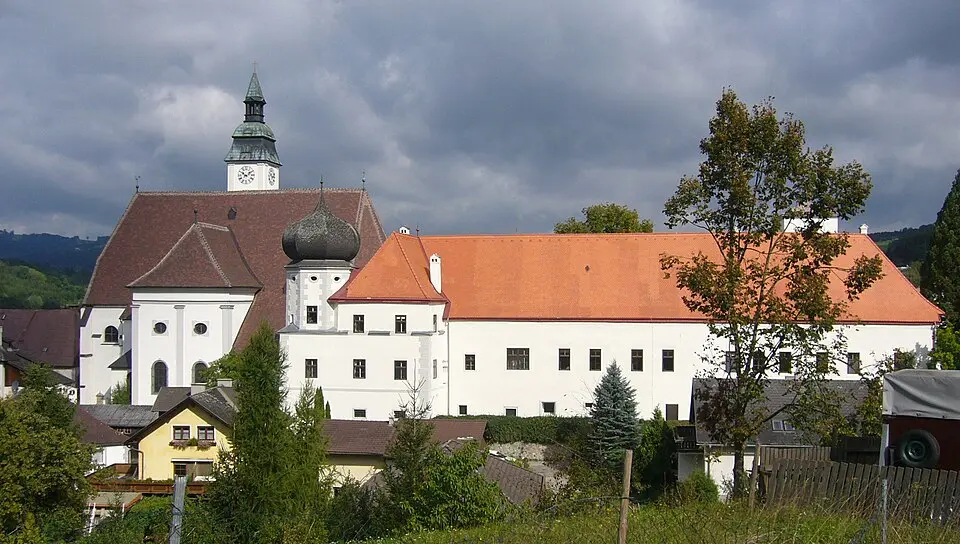
Scheibbs is located in the Mostviertel region of Lower Austria, where the Erlauf Valley shapes the landscape. The town is surrounded by foothills of the Alps and the striking Ötscher, which is always in view. The Große Erlauf river flows through the area and joins the Danube further downstream. With around 4,200 inhabitants, Scheibbs is the centre of the district of the same name and the seat of the district authority.
The place was first mentioned in writing in the 12th century, but Celts and Romans left traces long before. Slavic settlers probably gave the town its name, derived from a term for wild-growing dog roses. In the Middle Ages, Scheibbs developed into an important trading hub for iron and agricultural products, especially due to its location on the Dreimärktestraße. The Kartause Gaming shaped the town’s fate for centuries until it was dissolved in 1782.
Today, Scheibbs is known for its historic buildings, including the castle and the parish church on Rathausplatz. The Urlingerwarte on the Blassenstein offers a wide view over the region. Apart from administration and services, elevator production plays a central economic role. The town is considered the gateway to the Ötscherland and preserves the heritage of the Eisenwurzen era in its culture and landscape.