Ternitz lies in the lower Schwarza valley, where the Schwarza river flows through the municipal area from west to east. Situated at the start of the Steinfeld plain, it is bordered by the Gösing-Hochberg group, whose highest peak reaches 898 metres. The town extends over a large area of forests, fields and meadows, more than ninety per cent of which consists of green spaces. The cycle route along the Schwarza connects several districts such as Dunkelstein, Blindendorf and Pottschach.
First mentioned in 1352 as a field name, the present-day centre was already settled in the Middle Ages, as the dam remains of Thomb show. After a period of decline, the town experienced a revival in the 19th century with the construction of the Southern Railway and the establishment of an ironworks. The settlement of the steel industry under Alexander von Schoeller led to rapid growth, accompanied by the creation of workers’ housing estates. In 1923, several surrounding communities were merged to form the town of Ternitz.
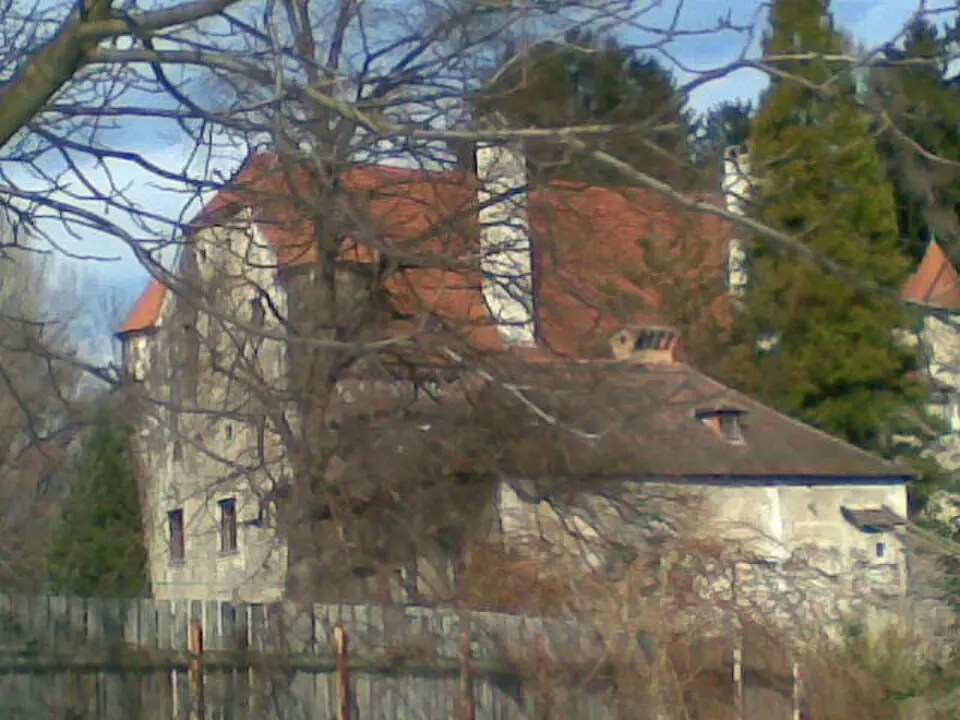
Ternitz is known for its historic buildings, such as Stixenstein Castle, which is used for cultural events, and the ruins of Dunkelstein Castle, which, after archaeological excavations, have been opened to the public as a park. The parish church of the Sacred Heart and the late Romanesque parish church of St John am Steinfeld are among the notable churches. The Steel Town Museum preserves the town’s industrial history. Set within the Sierningtal-Flatzer Wand nature park, the surrounding area offers opportunities for nature lovers.