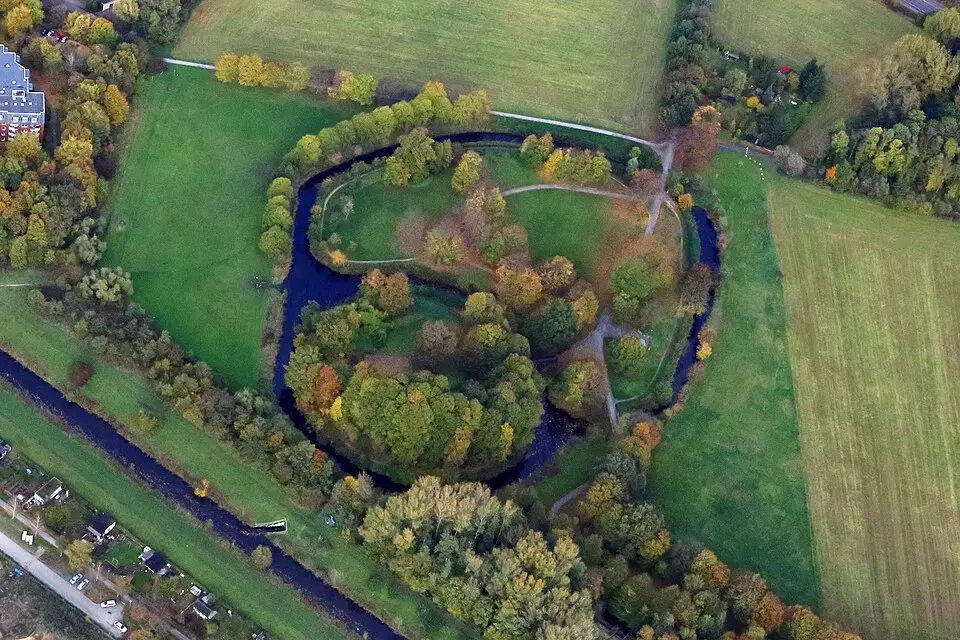
Hamm lies in the north of the Ruhr region and in the heart of Westphalia, where the Lippe flows from east to west and divides the city into two halves. North of the Lippe stretch the gentle hills of the Münsterland, while to the south begin the fertile Hellwegbörden. The Ahse, a left tributary of the Lippe, flows through the city and joins the Lippe in the east. With an area of around 110 square kilometres and an east-west extent of up to 22 kilometres, Hamm is one of the larger cities in the region.
The town was founded in the 13th century as a planned city to consolidate the power of the Counts of Mark. After a conflict with the Archbishop of Cologne, which culminated in the murder of the prelate, many residents of the destroyed town of Nienbrügge sought a new home and found it on the Lippe. The name Hamm goes back to an old field name and means something like “tongue of land.” In the Middle Ages the town developed into an important trading and judicial centre until the residence of the counts was moved to Kleve.
Today Hamm is best known as a railway hub, yet the largest German Higher Regional Court also shapes the cityscape. The mining spoil heap Kissinger Höhe rises more than 110 metres above its surroundings and offers wide views. The seven city districts reflect the city’s diversity, from historic cores to modern housing estates. The Lippe and its tributaries shape the landscape, while the spa park and the spoil heaps serve as green lungs.