

Topic · Innere Stadt
Dear Augustin

- Places
- 1

Dear Augustin on the façade of the Griechenbeisl
Dear Augustin
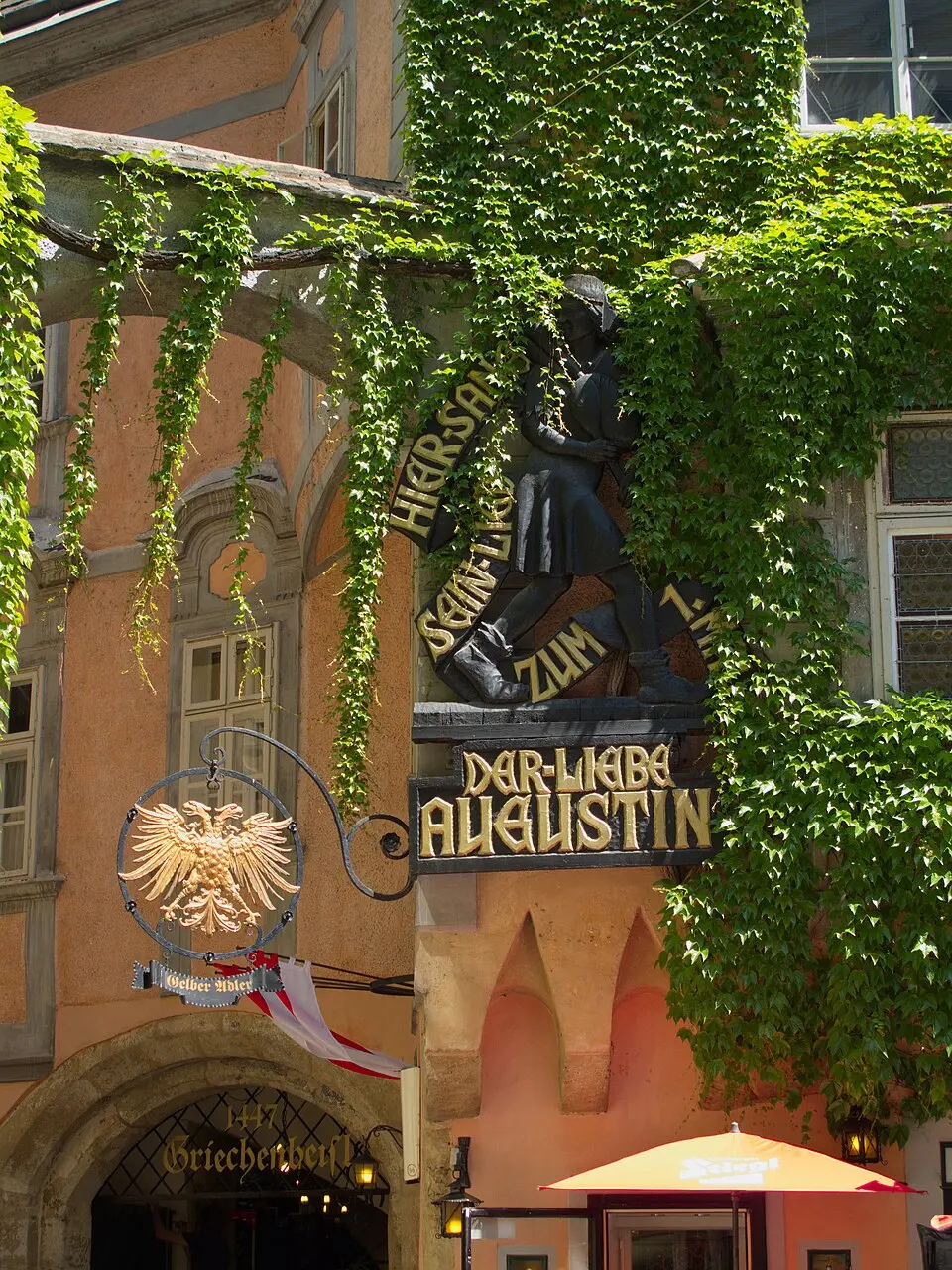
The Griechenbeisl on the Fleischmarkt
According to Wikipedia, Dear Augustin is a fictional figure: a ballad singer and bagpiper in Vienna who light-heartedly survives an outbreak of the plague. The Plague Column on the Graben recalls the plague of 1679, which according to Wikipedia was one of the last great plague epidemics in Vienna; it was erected after the epidemic.
Feigius’s Account (Plague Year 1679)
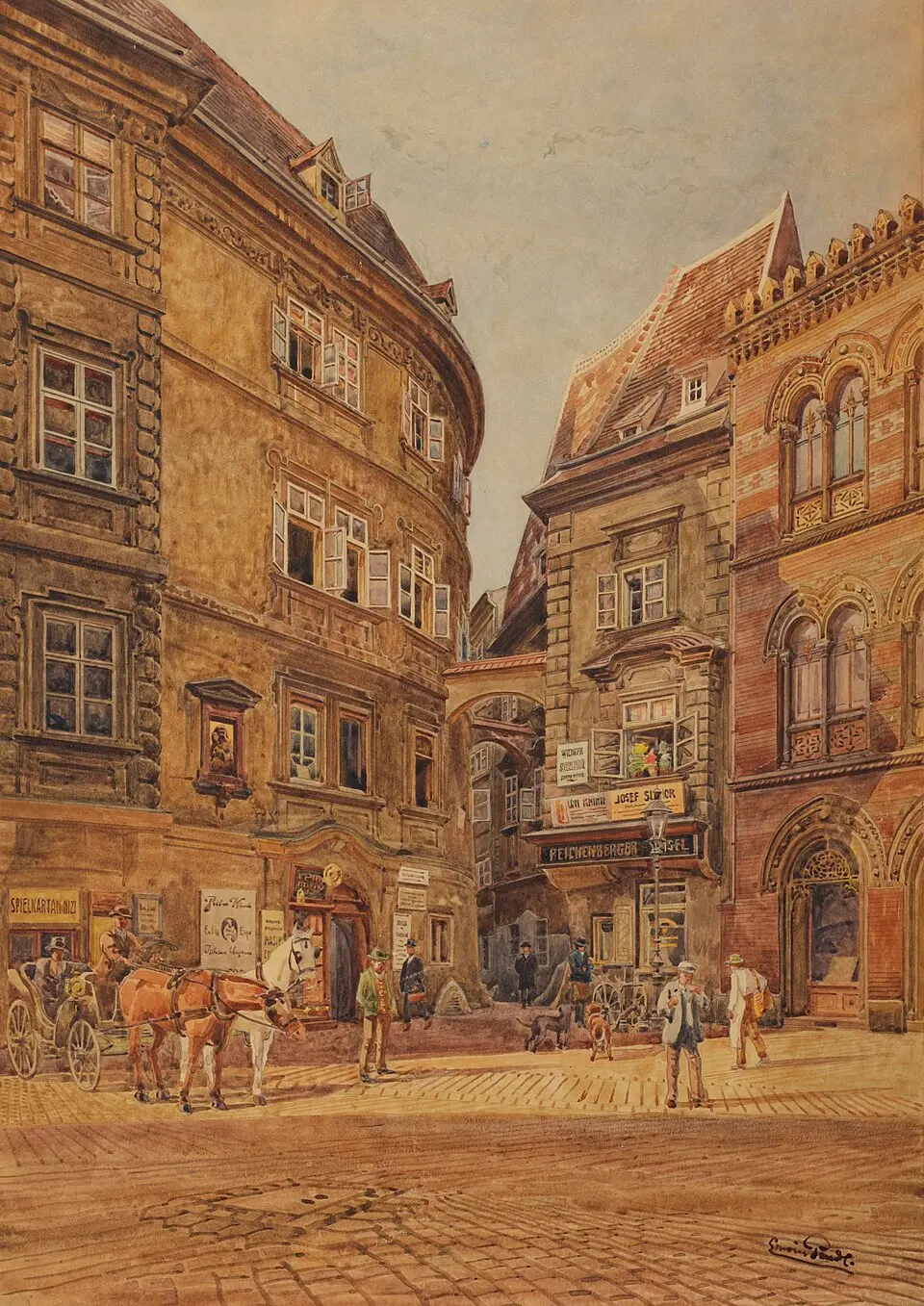
The Griechenbeisl and the Greek Church, watercolour by Erwin Pendl
The legend is told in the anthology “Sagen aus Wien” after an account by the Silesian law candidate Johann Konstantin Feigius, whom Wikipedia dates to the year 1694. In Vienna, it is said, people heard only the song of dying by then, and three hundred houses stood empty because all their inhabitants had died.
Around the city the dead and the sick lay as far as the gardens and lanes, and in the two plague hospitals a great number of people were buried every day. Because there were too few people to bury them, the dying were sometimes thrown into the pits among the dead.
Found in the Pit
Among them, it is said, was Augustin, a bagpiper who had fallen asleep drunk; the corpse-bearers took him for a sick man and threw him into a pit. Since the bodies were covered with earth only once a row was full, he slept the whole night among the dead.
The Night among the Dead
On waking he did not know how he had got there; because of the depth he could not climb out, and, stumbling about on the dead, he cursed, wondering which devil had brought him here.
Only at sunrise did the corpse-bearers come with more dead and help him out; the night’s lodging, it is said, did him no harm. Later, according to Wikipedia, he is said to have told the story as a ballad singer and to have made a fair living by it.
Putting It in Context
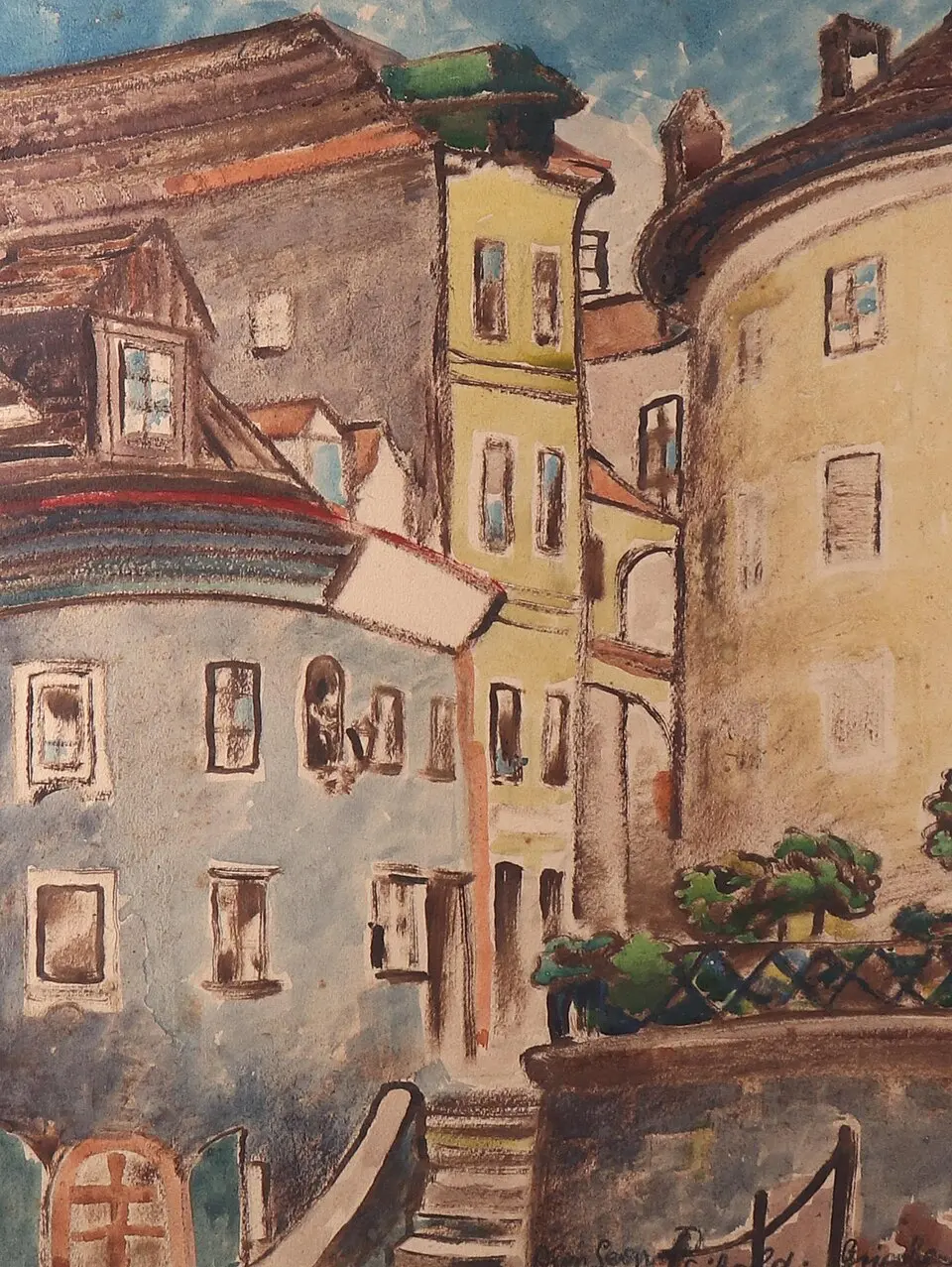
The Griechenbeisl, mixed media by Alois Leopold Seibold
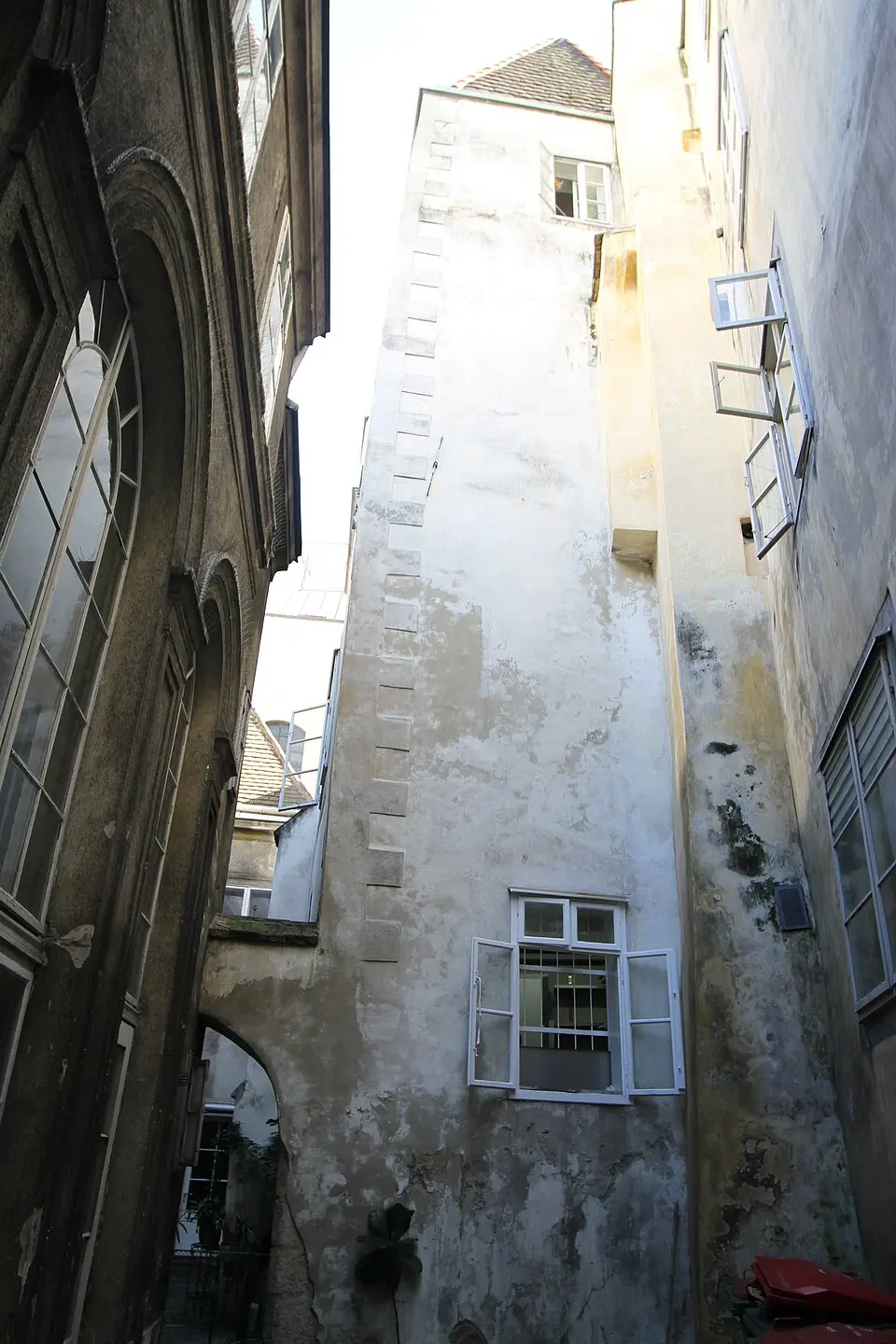
The residential tower of the Griechenbeisl at Fleischmarkt 11
According to Wikipedia, the legend of the drunken bagpiper was first mentioned in writing in 1679, by Paul de Sorbait, still without a name or a setting. In 1694 it appeared in Feigius already about an Augustin and as a true event; Wikipedia regards the place where the drunk man was found as an embellishment by the authors.
In Abraham a Sancta Clara (1710), Augustin survives the night in the plague pit by only a few days. Moritz Bermann included the legend in 1865 in his book “Alt-Wien in Geschichte und Sage”; in 1888 the legend collector searched the Viennese death registers around 1679 for the bagpiper and came upon several men called Augustin.
According to Gustav Gugitz, Dear Augustin never existed; he was a child of the imagination. A relief recalls him on the house on the Fleischmarkt that holds the Griechenbeisl, where according to Wikipedia Augustin is said to have performed regularly.
The places in this story.

A look at the region.
Where the places in this topic lie. The full list follows below.